Request consultation →
Advanced Cataract Surgery

Surgery that preserves
as much as it corrects

Modern cataract surgery is not merely the extraction of a clouded lens. It is the first step in a carefully orchestrated restoration of the visual system — beginning weeks before the patient enters the operating theatre, and continuing well into recovery.

Our Approach
Visual quality, not just visual acuity

Cataract surgery has undergone a profound conceptual evolution. The benchmark has shifted from simply achieving measurable Snellen acuity to delivering broad-spectrum visual quality: contrast sensitivity, mesopic function, reduced dysphotopsia, and optical coherence across the full range of daily visual demands. Achieving these outcomes requires surgical precision at every stage — from preoperative ocular surface stabilisation to the biologically informed wound architecture of microincision phacoemulsification.

The Complete Pathway

Three pillars of precision cataract care

Each surgical journey is built on a triad of surgical precision, biological preparation, and structured visual rehabilitation. These are not sequential steps — they are concurrent commitments.

Before Surgery

Ocular Surface
Optimisation

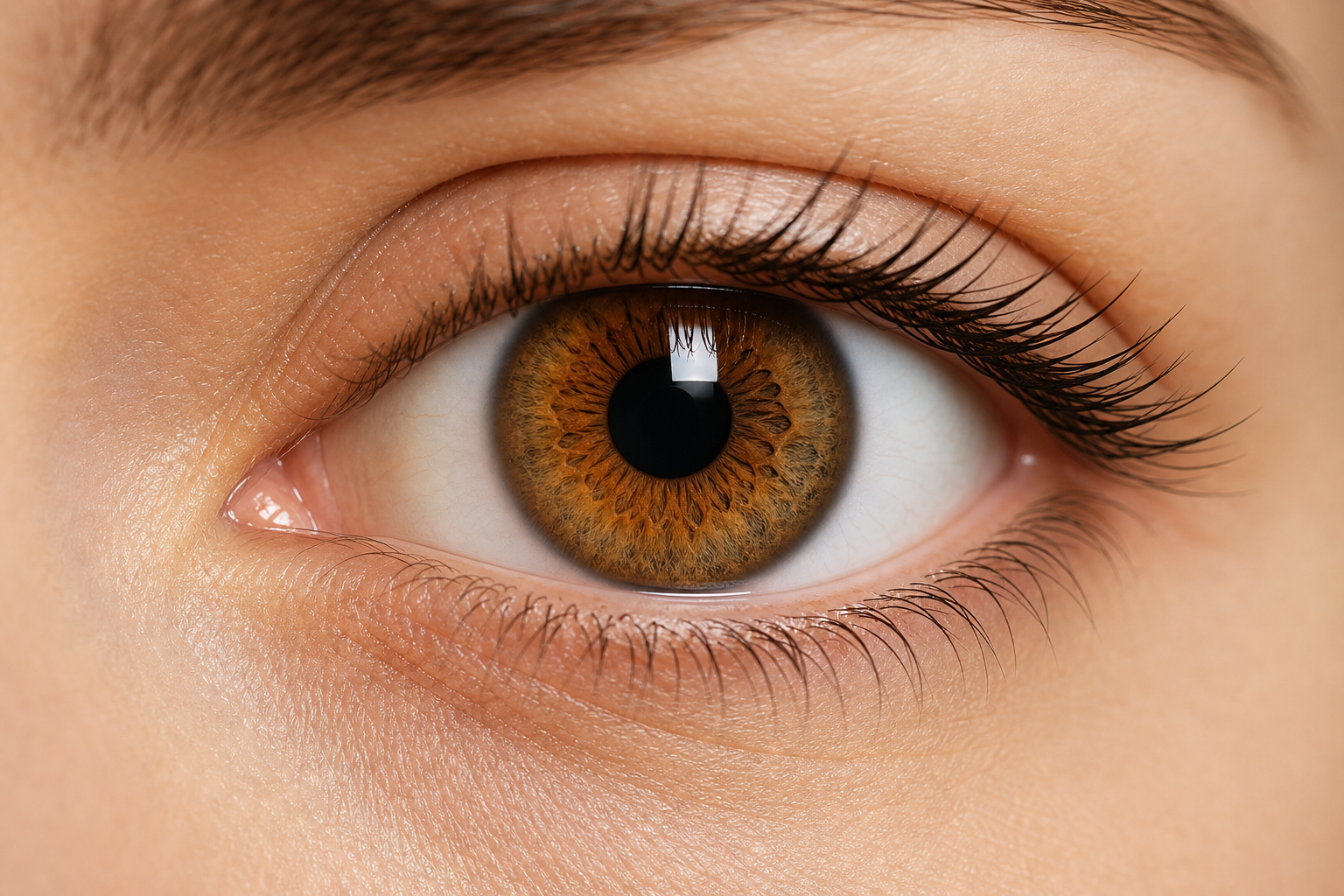
A stable, well-lubricated ocular surface is the optical foundation upon which surgical success is built. Clinically significant dry eye disease and meibomian gland dysfunction must be identified and treated before biometry, IOL calculation, and incision planning.
During Surgery

Precision &
Tissue Preservation

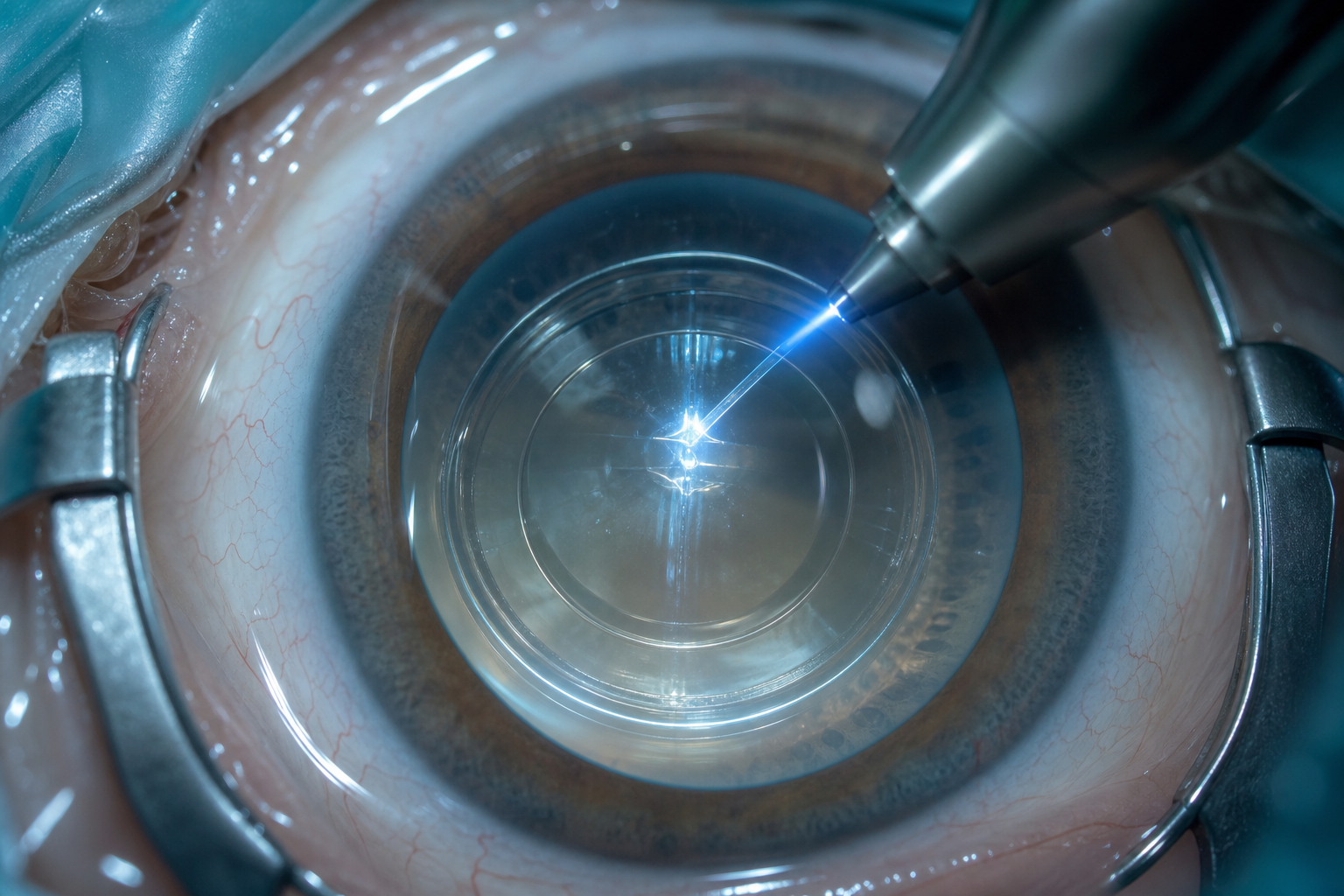
Femtosecond laser-assisted cataract surgery, microincision phacoemulsification, and minimisation of cumulative dissipated energy collectively reduce corneal endothelial cell loss and intraoperative trauma — protecting the tissues you rely on for lifelong vision.

After Surgery

Biologic Recovery &
Visual Rehabilitation

The postoperative period is not passive. Inflammation control, surface restoration, and targeted neuro-visual adaptation shape the final visual outcome. Structured follow-up addresses induced dry eye, posterior capsule opacification risk, and neuroadaptation required for multifocal optics.

Close-up of a healthy human eye showing tear film and corneal clarity
The Silent Confound

Why the ocular surface
determines surgical outcomes

The ocular surface is the first optical interface of the eye. Any disruption to tear film stability, epithelial regularity, or meibomian gland function introduces irregular astigmatism and optical aberration that no premium IOL can compensate for. Preoperative OSD management is therefore not optional — it is diagnostic infrastructure.

Biometric Accuracy

Irregular tear film elevates anterior corneal surface irregularity indices, leading to systematic IOL power prediction error of up to 0.5–1.0 D in moderate-to-severe DED.

Postoperative Dry Eye

Corneal incisions transect subepithelial nerve plexuses and reduce nasal corneal sensitivity. This neurogenic mechanism contributes to post-cataract dry eye syndrome in a significant proportion of patients.

Preservative Toxicity

Benzalkonium chloride (BAK), present in many topical perioperative agents, is directly cytotoxic to the corneal epithelium and goblet cells. Preservative-free formulations are preferred.

Femtosecond Technology

The femtosecond laser:
precision that protects

Femtosecond laser-assisted cataract surgery applies ultrashort-pulse photodisruption — laser pulses of approximately 10−15 seconds — to four key surgical steps traditionally performed manually. The laser delivers photodisruptive energy at precisely defined optical depths, creating tissue planes of sub-micron accuracy without thermal spread.

01

Corneal Incision Architecture

FLACS creates self-sealing, geometrically consistent corneal incisions with reproducible wound geometry that reduces surgically induced astigmatism compared to manual blade incisions.

02

Anterior Capsulotomy

The laser produces a perfectly circular anterior capsulotomy of precise diameter, with up to 10-fold greater circularity than manual continuous curvilinear capsulorrhexis. Optimal IOL centration depends critically on this precision.

03

Lens Fragmentation (Pre-Softening)

Laser pre-fragmentation of the crystalline lens nucleus substantially reduces the ultrasound energy required for phacoemulsification — directly lowering cumulative dissipated energy (CDE), the principal determinant of intraoperative corneal endothelial stress.

04

Limbal Relaxing Incisions

Laser-guided LRIs for preoperative corneal astigmatism offer depth-controlled, arc-accurate tissue relaxation — complementing toric IOL alignment strategies and expanding refractive precision.

Femtosecond laser creating precise incision planes within the crystalline lens
FLACS — Ultrashort Pulse Photodisruption
↓ CDE

Reduced Phacoemulsification Energy

Pre-fragmentation reduces ultrasonic energy delivered to the anterior chamber by up to 43%, minimising thermal and acoustic stress on corneal endothelium.

±0.03°

Capsulotomy Precision

Laser capsulotomy achieves near-perfect circularity and centration — critical for refractive predictability with EDOF and trifocal IOL platforms.

≤2.2mm

Microincision Architecture

Sub-2.2 mm clear corneal incisions with self-sealing geometry reduce surgically induced astigmatism and improve wound integrity.

ELP

Stable Effective Lens Position

Consistent capsulotomy size and overlap with the IOL optic promotes predictable effective lens position — the most important variable in postoperative refraction accuracy.

What Sets This Practice Apart

Five commitments to biologically intelligent care

01

Surface Before Lens

Every patient receives TFOS DEWS II–based OSD staging, meibography, and tear osmolarity assessment before biometry is initiated.

02

Energy Minimisation

FLACS lens pre-fragmentation and miLoop mechanical segmentation minimise ultrasonic energy, protecting corneal endothelial reserves for decades ahead.

03

Preservative-Free Protocol

Perioperative pharmacology is tailored to the ocular surface: preservative-free drops, surface-targeted anti-inflammatory agents, and ROCK inhibitor consideration in at-risk endothelium.

04

IOL-Matched Rehabilitation

Premium lens selection is followed by structured neuroadaptation support — particularly for EDOF and trifocal platforms — with guided visual training protocols.

05

Long-Horizon Outcomes

Posterior capsule management, YAG threshold considerations, and long-term endothelial surveillance are built into every follow-up plan.

Intraocular Lens Selection

Choosing the lens that serves your visual life

Modern IOL technology offers more than restoration of distance acuity. It offers the possibility of functional independence across multiple focal planes — when the ocular surface is healthy, the retina is intact, and surgical precision is maintained.

Monofocal

Aspheric Monofocal IOL

The established choice for patients preferring spectacle independence at distance. Modern aspheric monofocals offer negative spherical aberration correction, improving contrast sensitivity and mesopic visual quality beyond simple Snellen acuity.

  • Reduced spherical aberration (–0.1 to –0.2 μm SA)
  • High contrast sensitivity
  • Low dysphotopsia incidence
  • Toric option for corneal astigmatism
Trifocal / Presbyopia-Correcting

Trifocal Premium IOL

Diffractive trifocal platforms distribute light across three discrete focal points — distance, intermediate, and near — enabling functional spectacle independence. Optimal outcomes require a stable tear film and absence of significant corneal irregularity.

  • Three-focal-point design
  • Requires pre-op OSD optimisation
  • Neuroadaptation guidance provided
  • Not suitable for irregular astigmatism
Anterior Segment Anatomy

The cornea–lens interface:
where healing begins

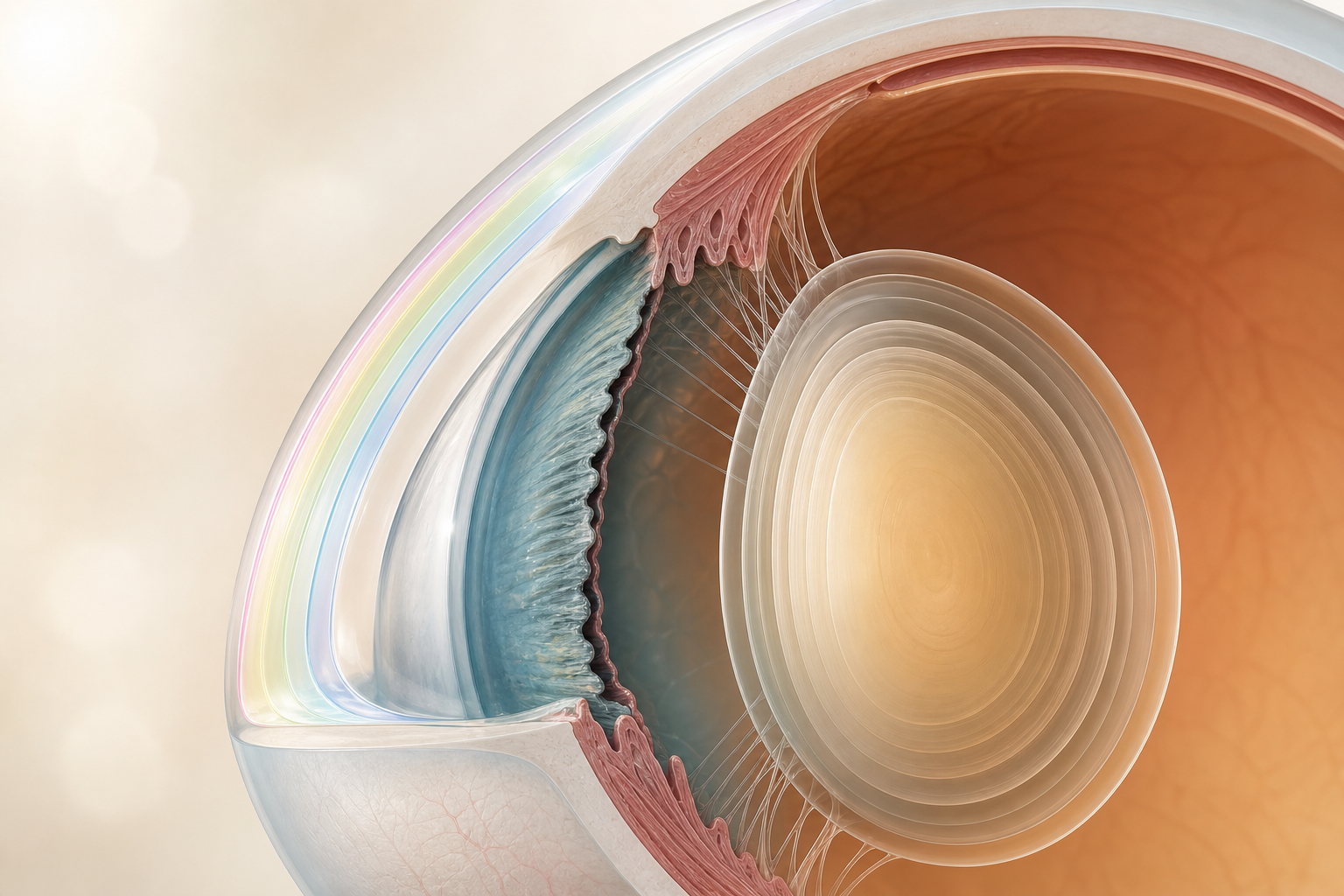
The tear film, corneal epithelium, stroma, and endothelium form a continuous optical and biological unit. Cataract surgery intersects this unit at multiple levels — understanding the anatomy drives our commitment to minimally traumatic technique.

Anatomical cross-section of the anterior eye segment
Visual Rehabilitation

The biology of healing after cataract surgery

Recovery from cataract surgery is not a passive interval. It is a sequence of biological events — from corneal wound healing and epithelial re-innervation to neuro-optic adaptation — each of which can be supported, and each of which can be impaired if neglected.

Hours 0–24

Immediate wound response

Corneal wound sealing and initial stromal oedema occur within hours. Visual acuity fluctuates with tear film instability and residual viscoelastic clearance. Topical NSAID and corticosteroid therapy begins to moderate the inflammatory cascade.

Wound sealingTear film instabilityAnti-inflammatory therapy
Days 1–7

Early inflammation control

Prostaglandin-mediated intraocular inflammation peaks in the first 72 hours. Aggressive but targeted anti-inflammatory therapy — preservative-free topical steroids and ketorolac — is essential to prevent cystoid macular oedema, the most common cause of suboptimal visual recovery.

CMO preventionSteroid taperIOL centration check
Weeks 2–6

Corneal nerve regeneration & surface recovery

Subepithelial corneal nerve fibres, transected during clear corneal incision, begin regeneration from the peripheral limbus. Reduced corneal sensitivity may impair the blink reflex and reduce tear clearance — manifesting as post-cataract dry eye syndrome.

Nerve regenerationPost-cataract DEDLubricant protocol
Months 1–3

Neuroadaptation and refractive refinement

Particularly relevant for EDOF and trifocal IOLs, neuroadaptation is the cortical process by which the visual system learns to selectively prioritise the appropriate focal image. Most patients complete primary neuroadaptation within 4–8 weeks.

NeuroadaptationSpectacle refinementPosterior capsule monitoring

Perioperative care principles

Inflammation Architecture

Topical corticosteroid and NSAID combination therapy is applied in a structured taper. Preservative-free formulations protect the epithelial barrier during this critical window.

Surface Restoration Protocol

Post-cataract dry eye — driven by corneal nerve transection and BAK toxicity — is anticipated and treated prophylactically. Sodium hyaluronate lubricants and IPL therapy for concomitant MGD are incorporated into the recovery plan.

ROCK Inhibitor Consideration

In patients with borderline endothelial cell counts (ECC <1,500 cells/mm²), Rho-kinase inhibitor therapy may be considered to support endothelial cell regeneration through promotion of endothelial proliferation and migration.

Patient Guide

Questions we hear — and answers that matter

These answers are written for educated patients and referring physicians. They reflect evidence-based practice, not simplified reassurance.

The ocular surface is the first refracting surface of the eye. Tear film instability introduces irregular anterior corneal astigmatism that directly affects the quality of corneal topography and keratometry readings used to calculate your intraocular lens power.

In practical terms: if your tear film is unstable at the time of biometry, your predicted lens power may be inaccurate by 0.5–1.0 dioptres or more. This is not correctable postoperatively without lens exchange surgery. We therefore insist on treating significant dry eye disease before IOL selection, even if this delays surgery by 4–6 weeks.

Femtosecond laser-assisted cataract surgery (FLACS) uses ultrashort laser pulses to perform four key steps with sub-micron precision: the corneal incisions, the anterior lens capsule opening, lens fragmentation, and astigmatism-correcting incisions.

The principal clinical benefit is a reduction in cumulative dissipated energy (CDE). Lower CDE is directly associated with reduced corneal endothelial cell loss. For patients with harder lens nuclei, borderline endothelial cell counts, or when premium IOL precision is critical, FLACS offers a measurable, evidence-supported advantage over manual technique.

Post-cataract dry eye results from a specific mechanism: the clear corneal incision transects subepithelial nerve fibres, reducing central corneal sensitivity and impairing the afferent arm of the blink-tear secretion reflex.

In most patients, corneal re-innervation occurs over 3–6 months, and symptoms resolve with structured topical lubrication. This condition responds well to treatment — including sodium hyaluronate lubricants, omega-3 supplementation, IPL therapy for MGD, and in severe cases, autologous serum or scleral lens therapy. It is rarely permanent when appropriately managed.

CDE is a composite metric representing the total ultrasonic energy delivered within the anterior chamber during lens removal: 1 unit of CDE = 1% ultrasound power applied for 1 second.

Why it matters: Corneal endothelial cells do not regenerate in vivo. Phacoemulsification-related endothelial cell loss adds to physiological age-related decline. Minimising CDE through pre-fragmentation and efficient technique preserves this irreplaceable cell reserve. A low CDE is one of the most meaningful metrics of surgical quality.

Extended depth of focus (EDOF) IOLs create a continuous elongated focal zone, prioritising smooth distance-to-intermediate vision with reduced photic phenomena. Near vision is improved over monofocals but reading spectacles may still be needed.

Trifocal IOLs create three discrete focal points — distance, intermediate, and near. They offer greater spectacle independence but can modestly reduce contrast sensitivity in low light. Both technologies require a stable, optimised ocular surface and a healthy retina to deliver their designed optical performance.

Posterior capsule opacification — colloquially termed "secondary cataract" — results from the proliferation and migration of residual lens epithelial cells across the posterior capsule, producing a haze that reduces visual acuity.

Management is definitive and non-invasive: Nd:YAG posterior capsulotomy creates a clear optical aperture using precisely focused laser energy. The procedure takes under 5 minutes, is performed in the outpatient setting, and restores vision promptly. It is permanent.

Neuroadaptation to multifocal and EDOF IOLs is a genuine neurological process. The visual cortex must learn to selectively process the in-focus image from multiple foci. This varies significantly between individuals and is influenced by cortical plasticity and residual refractive error.

Most patients complete primary neuroadaptation within 4–8 weeks after bilateral implantation. Full adaptation, including reduction of halos, can take 3–6 months. Patients who remain dissatisfied after 6 months require careful reassessment for residual refractive error, posterior capsule haze, or surface disease.

Evidence Foundation

Landmark concepts &
scientific references

Our clinical protocols are grounded in peer-reviewed evidence. The following landmark publications and classification frameworks inform our approach to cataract surgery and perioperative care.

Ocular Surface Disease

TFOS DEWS II Report (2017). Wolffsohn JS et al. The classification framework underpinning our preoperative OSD staging protocol. Establishes DED as a multifactorial condition characterised by loss of tear film homeostasis.

FLACS & Endothelial Protection

Abell RG et al. (2014). J Cataract Refract Surg. Prospective study demonstrating significant reduction in cumulative dissipated energy with femtosecond-assisted lens fragmentation; foundational evidence for FLACS endothelial benefit in grades III–IV nuclear sclerosis.

Capsulotomy Precision

Kránitz K et al. (2011). J Refract Surg. Comparative analysis confirming femtosecond laser capsulotomy achieves 10-fold greater circularity and improved centration versus manual CCC; relevant to effective lens position predictability with premium IOLs.

Post-Cataract Dry Eye

Li XM et al. (2007). J Cataract Refract Surg. Prospective characterisation of corneal nerve density reduction and tear film disruption following clear corneal phacoemulsification; mechanistic basis for post-cataract DED management.

OSD & IOL Prediction Error

Epitropoulos AT et al. (2015). J Cataract Refract Surg. Demonstrates that elevated tear osmolarity and OSDI scores are associated with significantly higher rates of IOL power prediction error; evidence supporting mandatory DED treatment before biometry.

ROCK Inhibitors & Endothelium

Okumura N et al. (2014). Invest Ophthalmol Vis Sci. Establishes the ROCK inhibitor role in promoting corneal endothelial cell proliferation, migration, and adhesion; basis for ripasudil/netarsudil use in post-surgical endothelial support.

PCO & IOL Design

Findl O et al. (2005). Surv Ophthalmol. Systematic review of IOL material and edge design characteristics on PCO rates; evidence basis for hydrophobic acrylic, sharp-edge optic preference in reducing posterior capsule opacification.

Neuroadaptation

Pepose JS et al. (2011). Am J Ophthalmol. Neurophysiological study of cortical adaptation mechanisms following bilateral multifocal IOL implantation; basis for structured neuroadaptation guidance in EDOF and trifocal IOL recipients.

Begin Your Consultation

Surgery begins long before the operating theatre

A thorough preoperative assessment — ocular surface, biometry, endothelial evaluation, and visual goals — is the most important step in your cataract surgical journey. Let us build your individual care pathway.